What is a car rental app?
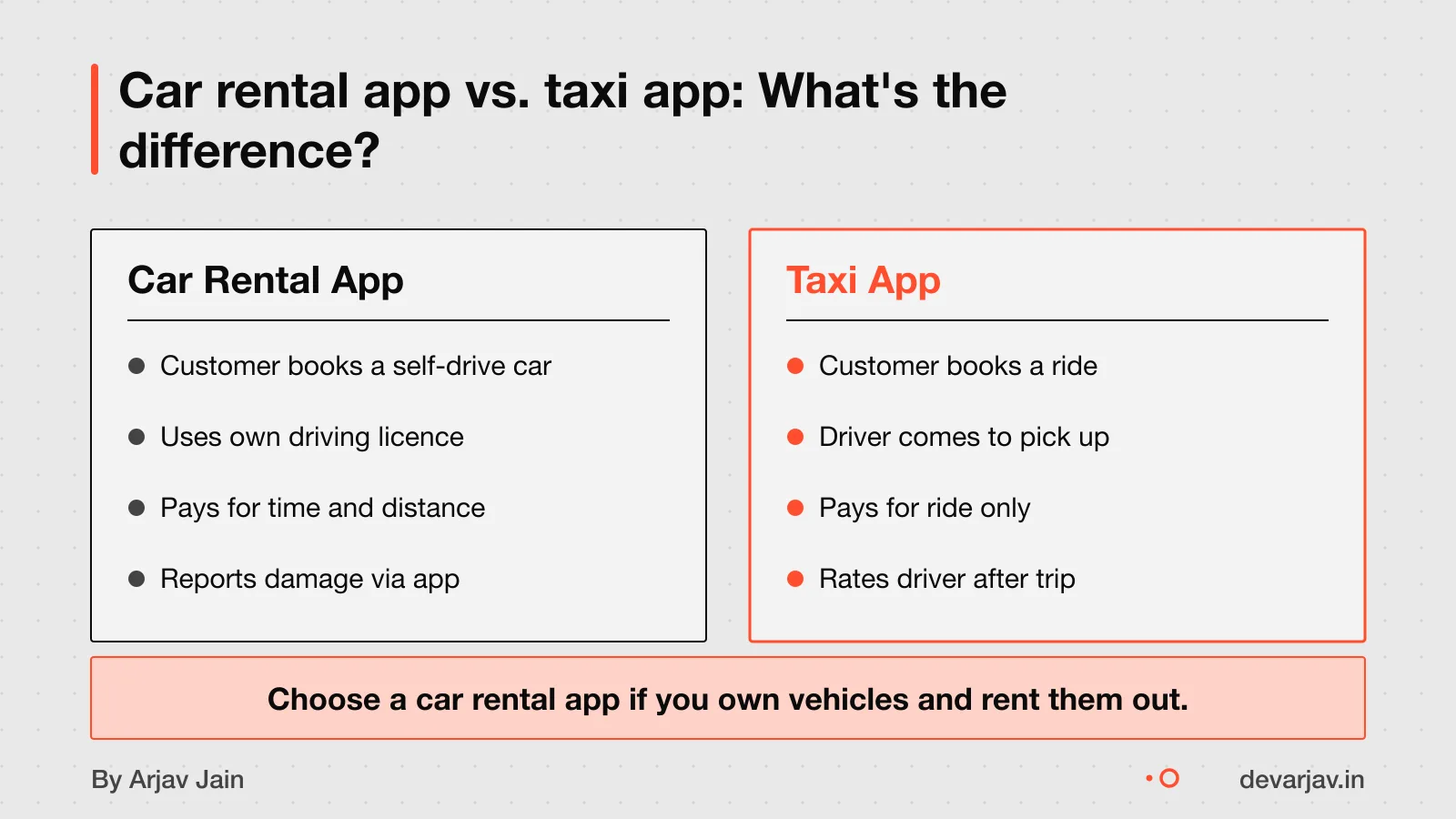
A car rental app lets customers book a self-drive car for hours or days, unlike a taxi app where a driver comes to you. You pick the car, set the pickup time, and open it with your phone.
The core functions are search, booking, secure payment, and digital key handover. It must also track the car’s location and support damage reporting before and after trips. For example, a small rental business in Indore can let customers book a Swift Dzire for 24 hours without staff help.
Such an app must meet Google’s “Car ready” rules to be on the Play Store. These rules cover safety, driver distraction, and how the app works in a moving vehicle.
For a full list of features, see Must-have features for a car rental app.
Do you really need an app?
You can run your car rental business without an app if you have a small fleet and serve local customers. Many small owners use WhatsApp and spreadsheets to book rides, track returns and manage payments. This works well when you know your customers and do not get bookings from outside your city. For example, a taxi owner in Indore with five cars can use phone calls and a Google Sheet to manage daily trips.
An app becomes worth the cost when you want to grow beyond your town, accept online payments or reduce booking errors. If customers ask for app-based booking or you want to list on travel sites, an app helps. It also cuts down on missed calls and double bookings. But for most small fleets under ten vehicles, a simple system with WhatsApp and a shared calendar is enough.
Check what features you really need. If you are not adding online payments, GPS tracking or damage reporting, the app may not be worth ₹6 lakh or more. Start small and add tech only when it saves time or brings more customers.
What makes a car rental app expensive?
The cost rises due to complex features like real-time GPS tracking, driver KYC checks, digital damage reporting, and secure payments. These are not simple screens but involve background services, third-party APIs, and legal compliance. Each adds layers of testing and maintenance.
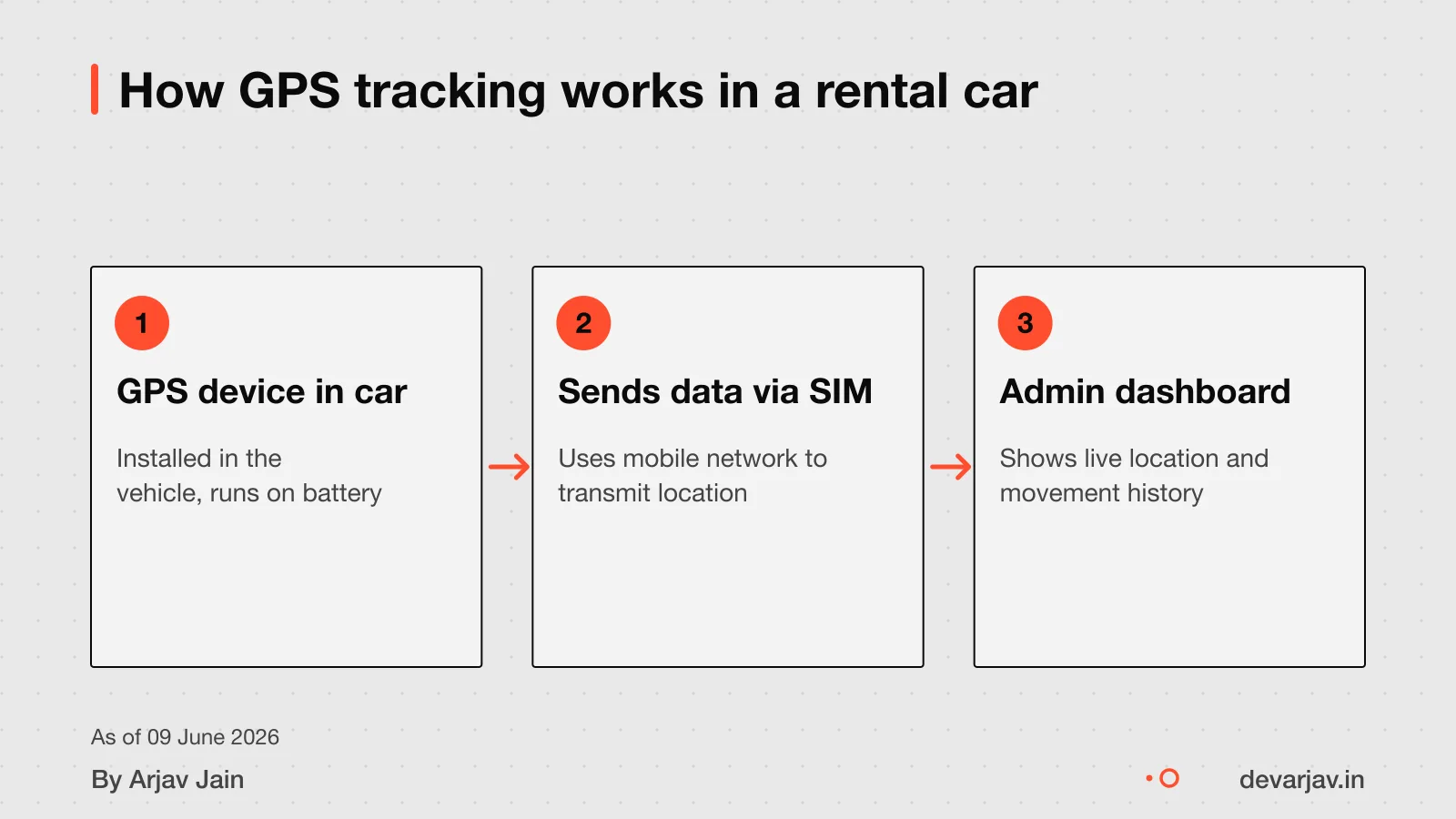
For example, GPS tracking must work even when the app is in the background or the phone sleeps. This needs custom code on both Android and iOS. It also drains battery, so users may turn it off. Solving this takes expert work.
Driver KYC and licence verification require linking to government or private identity services. You must confirm a driver’s licence is real and active. This involves OCR, face match, and sometimes liveness checks. The system must also update if a licence is suspended later.
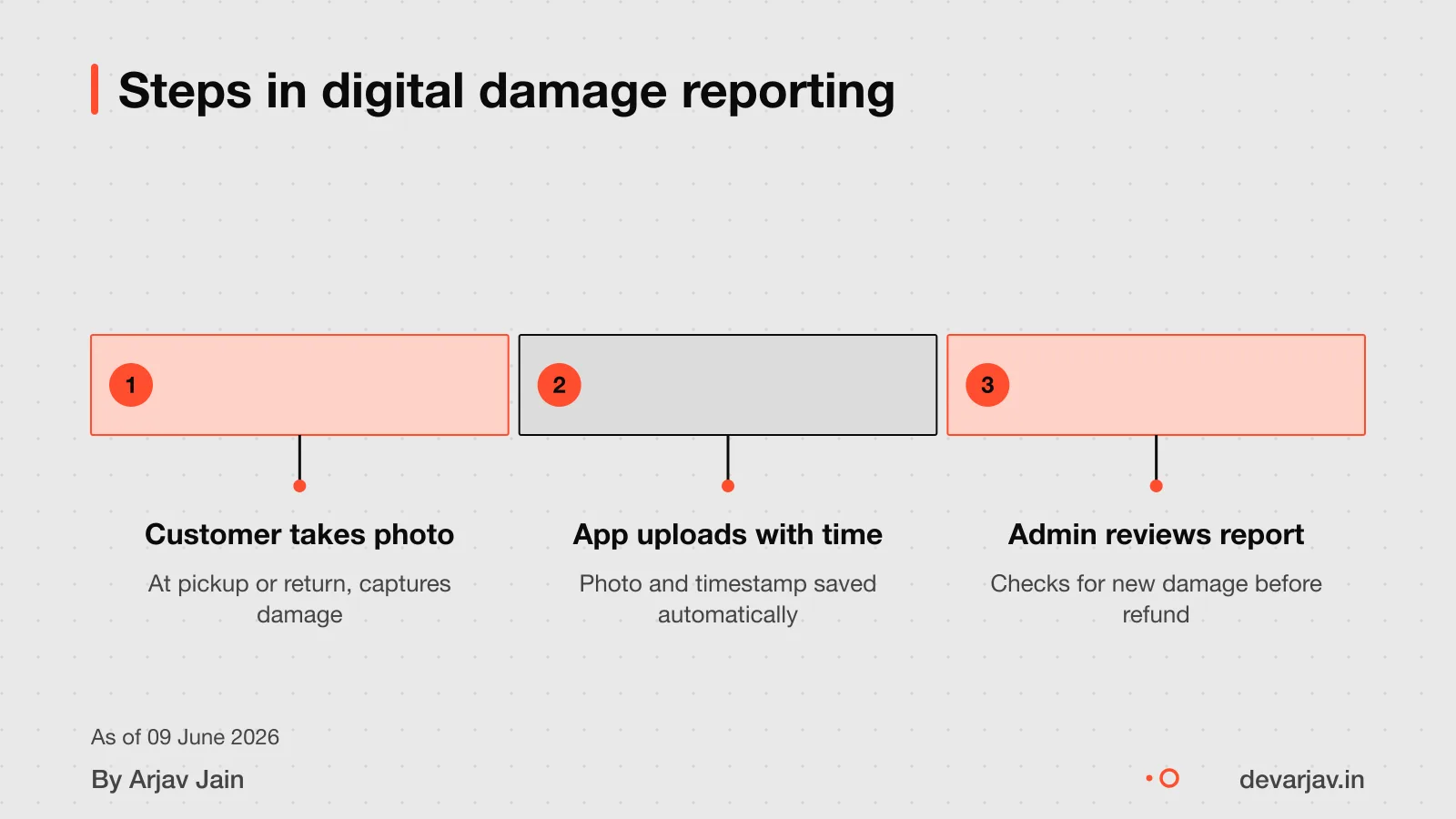
Digital damage reporting lets renters log dents or scratches before and after a trip using photos and notes. This data becomes evidence in disputes. Building it means structured forms, cloud storage, timestamps, and access controls. It must be tamper-proof.
Payment integration is not just a "Pay Now" button. You need escrow logic, refund rules, damage chargebacks, and GST billing. Each rental may span states, so tax rules vary.
Tech choice affects cost. A poor stack may save money at first but cost more in crashes, downtime, or failed audits. For long-term savings, the right tools matter.
You may see low quotes that skip these features. They often resurface as change requests or fines later. That is why total cost is rarely clear up front.
The exact cost to build GPS tracking, KYC, damage reports, or dual-platform support is not known. These prices are not published. To check a quote, ask what each of these features includes, or leaves out.
Best tech stack for a car rental app
How much does driver KYC and licence check cost?
You can check a driver's licence status for free using the Telangana Transport Department's online search tool. This public service lets anyone enter a licence number and see its status, class, and validity without charge. The same applies to other state transport portals across India.
Building this check into your car rental app is not free, even though the data source is. The cost to integrate licence verification into your app is not known. It depends on how many states you support, how often you check, and whether you need OCR to read the licence from a photo.
For example, you might let a driver scan their licence in the app. The app would then pull details from the government site to confirm they are valid. This requires coding, error handling, and updates when the portal changes.
The government does not charge for access, but building the link, testing, and maintenance are needed, though their cost is not known. Some third-party services offer ready-made KYC checks, but their prices vary and are not in the evidence.
Since the integration cost is not known, ask your developer to break down this line item in the quote. Check if they are using direct government APIs or a paid middleman.
How much does digital damage reporting cost?
Digital damage reporting lets renters take photos of a car before and after use, with timestamps and location tags, to record its condition. This feature is complex because it needs secure photo uploads, metadata validation, admin review panels, and audit trails to prevent disputes. It includes in-app photo capture, automatic timestamping, GPS tagging, cloud storage with access controls, and a dashboard for staff to compare reports and flag damage.
The development cost for this feature is not known. No public data or project records list a specific price for building it. As an estimate, assuming photo upload, metadata checks, and a review interface, this could take 3 to 4 weeks of development time. But the real cost depends on image quality rules, integration with insurance workflows, and whether AI checks for damage are added later.
They should show the cost for the mobile photo interface, backend storage, admin tools, and testing. If they bundle it into a flat quote without details, you may pay extra for features you do not need.
How much does GPS tracking cost per vehicle?
GPS tracking cost has two parts: hardware and monthly fees. Basic GPS hardware costs ₹1,500 to ₹3,500 per device if you buy it outright. Mid-range devices, which offer better accuracy and tamper alerts, cost ₹3,500 to ₹7,000 per unit. You only pay this once, at the start.
Monthly fees cover data and software access. For basic tracking, expect ₹200 to ₹500 per vehicle. Mid-range plans cost ₹500 to ₹900 and often include geofencing and speed alerts. These plans usually do not include the SIM card.
SIM cards add ₹100 to ₹200 per vehicle each month. They are needed for real-time location updates. Installation costs ₹300 to ₹1,500 per vehicle, depending on wiring complexity and whether the device is hidden. This is a one-time charge.
So, for one vehicle, your first-month cost could be ₹1,500 to ₹3,500 (basic hardware) + ₹300 to ₹1,500 (install). Then ₹200 to ₹500 per month after that. Costs go up if you choose better hardware or more features.
For a 10-vehicle fleet, hardware alone could cost ₹1.5 lakh to ₹3.5 lakh for basic devices or ₹3.5 lakh to ₹7 lakh for mid-range devices. This is separate from your app development cost.
Fleet tracking app cost covers similar costs if you are comparing options.
How much extra for Android and iOS support?
Most car rental apps today work on both Android and iOS. This is standard, not an extra feature. Developers use tools like Flutter or React Native to build for both platforms at once. This cuts time and effort compared to making two separate apps.
But building for both does not mean double the cost. The main work, like user login, booking flow, and payment, is written once and runs on both phones. Some parts still need separate work. For example, GPS tracking or camera use may need custom code for each OS. These small differences add effort, but not a full second app’s cost.
As a result, most quotes you get will include both platforms by default. If a developer charges much more for iOS support, ask why. It may be due to extra features, not just the platform.
Since the exact cost difference is not published, focus on the full package. Ask for a breakdown of what each part includes. That way, you can compare fairly and avoid surprise fees.
What are the monthly costs after launch?
Your monthly costs will depend on how many bookings you get and how many vehicles you track. The main costs are payment gateway fees and GPS subscriptions.
Payment gateways like Razorpay charge 2% + GST on each successful transaction. This applies to payments made by UPI, cards, net banking, or wallets. There are no setup fees or annual maintenance charges (AMC) with Razorpay. GST is charged at 18% on top of the transaction fee.
You will also pay a monthly subscription for GPS tracking per vehicle. Mid-range systems with more features cost ₹500 to ₹900 per vehicle per month.
Other recurring costs may include cloud hosting, app store fees (if any), and customer support tools. These are not in the evidence, so ask your developer for a breakdown.
Want a number for your idea? Send one line on WhatsApp. I reply with what drives the cost and what to cut.
Message me on WhatsAppWhat are the risks of a low-cost app?
Cheap car rental apps often skip key features like secure KYC checks, accurate GPS tracking, or digital damage reporting. These omissions can lead to legal trouble, fraud, or disputes over vehicle damage. A low-cost app may also use weak security, putting customer data at risk.
Many budget apps are built as simple booking forms without offline support or real-time updates. This means they fail when drivers have poor network coverage. They may not sync properly, causing double bookings or open failures. Updating such apps later is hard and often costs more than starting fresh.
Some low-cost apps rely on outdated tools or copied code. This makes them slow, prone to crashes, and incompatible with new Android or iOS versions. Over time, they become unusable. You may end up rebuilding instead of upgrading.
A poorly built app can harm your brand. Customers expect smooth booking, instant open, and clear damage records. If your app fails, they will not return. Worse, they may leave bad reviews that hurt your business.
While you save money upfront, hidden flaws in a cheap app can cost more in repairs, lost bookings, and customer trust. It is better to start with a solid build than to fix a broken one later.
How to check if a quote is fair
Look for a clear list of what each part of the cost covers. A fair quote breaks down the price for features. For example, digital damage reporting cost and KYC check cost are not publicly known. Ask for a breakdown. If these are missing or bundled as "basic features", the final cost may rise later. Ask for line items, not totals.
You can test before paying. Some platforms offer free trials. For example, Sahaj GPS provides a free trial period so you can test the tracking on your vehicles before committing. Use this time to check if the app works when the phone is offline or the battery is low.
A quote that does not list hidden costs like third-party API fees or admin panel access is not complete. If the developer refuses a breakdown, consider it a red flag.
Related reading: How long does it take to build a car rental app?, Build or buy a car rental app: custom, white-label or platform?.
Have a quote in hand? Send it to me and I will mark what is missing.
Message me on WhatsAppAssumptions behind the numbers
- Assumed basic GPS hardware cost: ₹1,500 – ₹3,500 per device.
- Assumed basic GPS monthly subscription: ₹200 – ₹500 per vehicle.
- Assumed mid-range GPS hardware cost: ₹3,500 – ₹7,000 per device.
- Assumed mid-range GPS monthly subscription: ₹500 – ₹900 per vehicle.
- Assumed installation charges for GPS devices: ₹300 – ₹1,500 per vehicle.
- Assumed SIM card costs for GPS tracking: ₹100 – ₹200 per vehicle per month.
- Assumed Razorpay transaction fee: 2% + GST.
- Assumed other gateway TDR range: 1.6% to 2.5%.
- Assumed other gateway setup fee range: ₹5,000 – ₹50,000.
- Assumed other gateway AMC range: ₹2,400 – ₹9,999/year.
Work out your own number
I won't hand you a number that pretends to be the market. Instead, here is the working: set the weeks, the people and the rate, and see where the money goes.
Your working total
₹4,40,00011 weeks × 2 people × 5 days × ₹4,000- Scope and design18%
- Build55%
- Testing and fixes18%
- Launch and stores9%
The weeks shown are an example of a small app, there to be changed. Fees you pay others (store accounts, cloud, SMS) are not in this total.
What moves the price
- More screens or roles
Each extra user type (customer, admin, rider) is close to another app.
- Real-time features
Live tracking and chat need more design and more testing.
- Many integrations
Every payment, SMS, maps or ERP link is its own piece of work.
- Cutting to one platform first
Starting with one clear flow can be half the work.
- Using managed services
A managed backend for login and data removes weeks.
- A clear scope up front
Changes mid-build are the most expensive weeks.
Fees that go to someone else
Google Play developer account
A one-time registration fee, paid to Google. Check the current amount.
Apple Developer Program
A yearly fee paid to Apple. Check the current amount.
Cloud, SMS, maps, payments
Usage-based, billed by the provider to you.
Ask for these before you sign
- How many weeks per phase, and with how many people?
- What is not included?
- Which fees do I pay to others directly?
- What happens to the price when I change my mind?
- What does the first month after launch cost?
Questions people ask
How much does it cost to build a car rental app in India?
The average cost to build a car rental app is not known. You should get a custom quote based on your needs.
Why does the cost go up so much?
The cost to add driver KYC and licence verification is not known. The cost of digital damage reporting is not known.
How long does it take to build a car rental app?
The time to build a car rental app is not known. For a clear timeline, see /guides/how-long-does-it-take-to-build-a-car-rental-app/.
Do I need to pay GST on app development?
GST of 18% applies on payment gateway fees like TDR. Check this for your case with a chartered accountant.
Can I add features later?
Yes, you can add features later if the app is built with modular design. Make sure you own the source code. Adding features later may still need rework if the base is not flexible.
Who owns the app after it is built?
You should own the app's source code after it is built. The developer may use third-party tools or SDKs that you do not own. For example, Google is not responsible for apps using the Google Maps SDK. Ask for full code transfer and check third-party terms.
What if the quote I get is much lower?
A much lower quote may mean corners cut on security, compliance, or scalability. Ask for a breakdown of features and time. Compare it to standard costs for GPS, KYC, and payment systems.
How do I handle deposits and refunds?
Payment gateways charge between ₹5 and ₹25 per refund at some gateways. The logic to hold deposits and release them after trip end affects development cost. Build this carefully to avoid disputes.
Is there a free way to test GPS tracking?
Yes, Sahaj GPS offers a free trial for their tracking system. Some platforms offer free trials to test before committing. Use these to test before you commit.