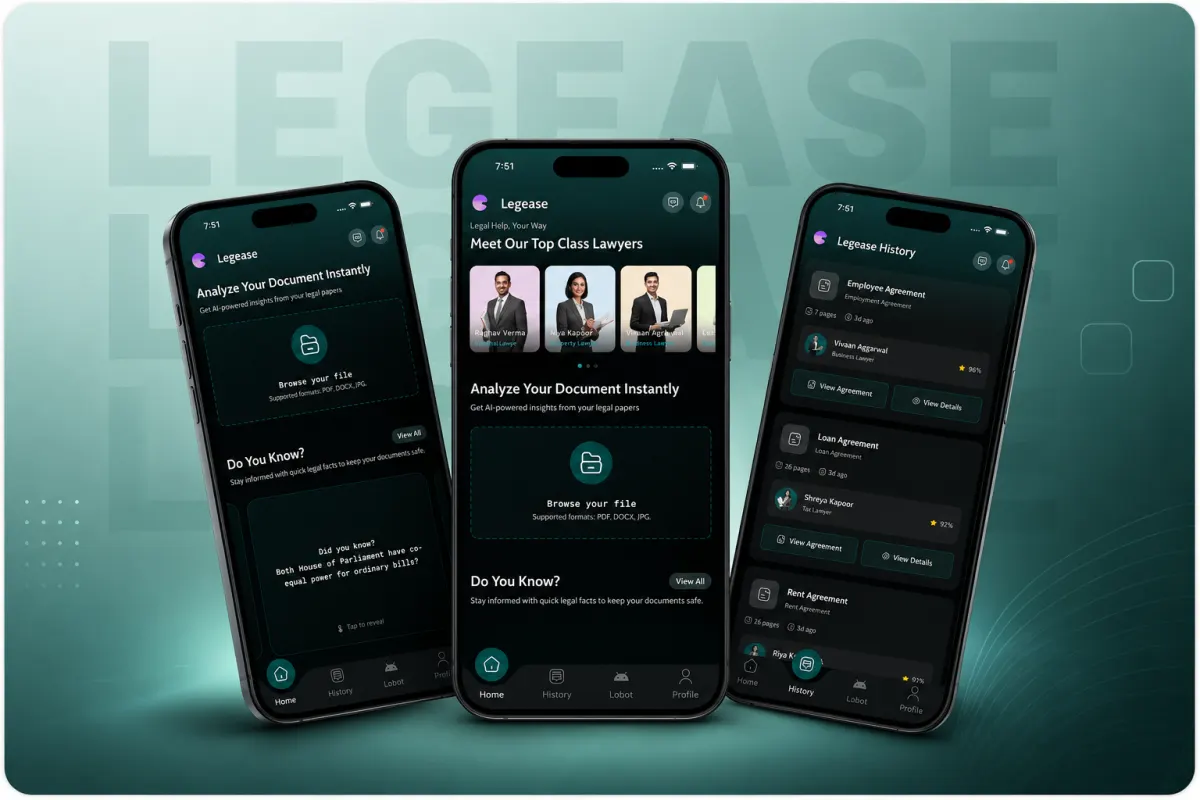
What Legease does
Legease helps small businesses quickly review contracts by pulling out key terms and tracking deadlines. It solves the problem of spending too much time reading long documents like a shop lease or vendor agreement. As an AI tool, it makes review faster by automatically extracting clauses, dates, and obligations that matter to you. You save up to 50% of the time usually spent on manual checks.
For renewal dates and obligations, Legease flags them clearly and can send alerts. For example, if your security service contract renews in 30 days, it will remind you ahead of time. This helps you act early, either to renew, renegotiate, or cancel. Tools like Lexagle offer similar tracking for milestones and renewals with notifications. Legease does not sign or enforce contracts, but it helps you stay on top of them.
Do you need Legease for your business?
Poor contract management can cost your business up to 9% of annual revenue. This happens when you miss renewal dates, overlook penalties, or fail to track deliverables. For a small business earning ₹1 crore a year, that is ₹9 lakh lost to oversight.
AI can help with routine checks like spotting missing clauses or flagging unusual terms. It cuts time spent reading long documents. But it does not replace legal advice.
For example, if you sign vendor contracts monthly, AI speeds up review. You still need a lawyer for complex deals.
If your work involves few or simple agreements, a tool like how Aashwasan helps freelancers manage contracts may be enough.
How much to build an AI contract app
As an estimate, building an AI contract app starts from $12,000 and can go beyond $500,000, depending on scope. This range covers simple tools to full custom platforms with fine-tuned AI models. The base cost includes planning, design, and core development. As an estimate, assuming a mid-range tool with Indian contract support, the build cost is ₹50 lakh to ₹1.2 crore.
Data preparation adds 25 to 40 percent of the total cost. This includes gathering, cleaning, and labelling contracts for training the AI. Complex clause types or rare formats increase this work. As an estimate, for a $100,000 build, data prep may cost 25 to 40 percent of the total cost.
Annual maintenance adds 15 to 25 percent of the build cost. This covers updates, hosting, and AI inference fees. For a $100,000 build, expect 15 to 25 percent of the build cost per year. Costs rise if you add new features or support more document types.
For a small business, a simpler version with pre-trained models may cost ₹9 to ₹15 lakh. This uses ready-made AI and basic Flutter app design. You can see what a Flutter app costs in India for general context [/cost/flutter-app-development-cost/].
Want a number for your idea? Send one line on WhatsApp. I reply with what drives the cost and what to cut.
Message me on WhatsAppDoes Legease work with Indian contracts?
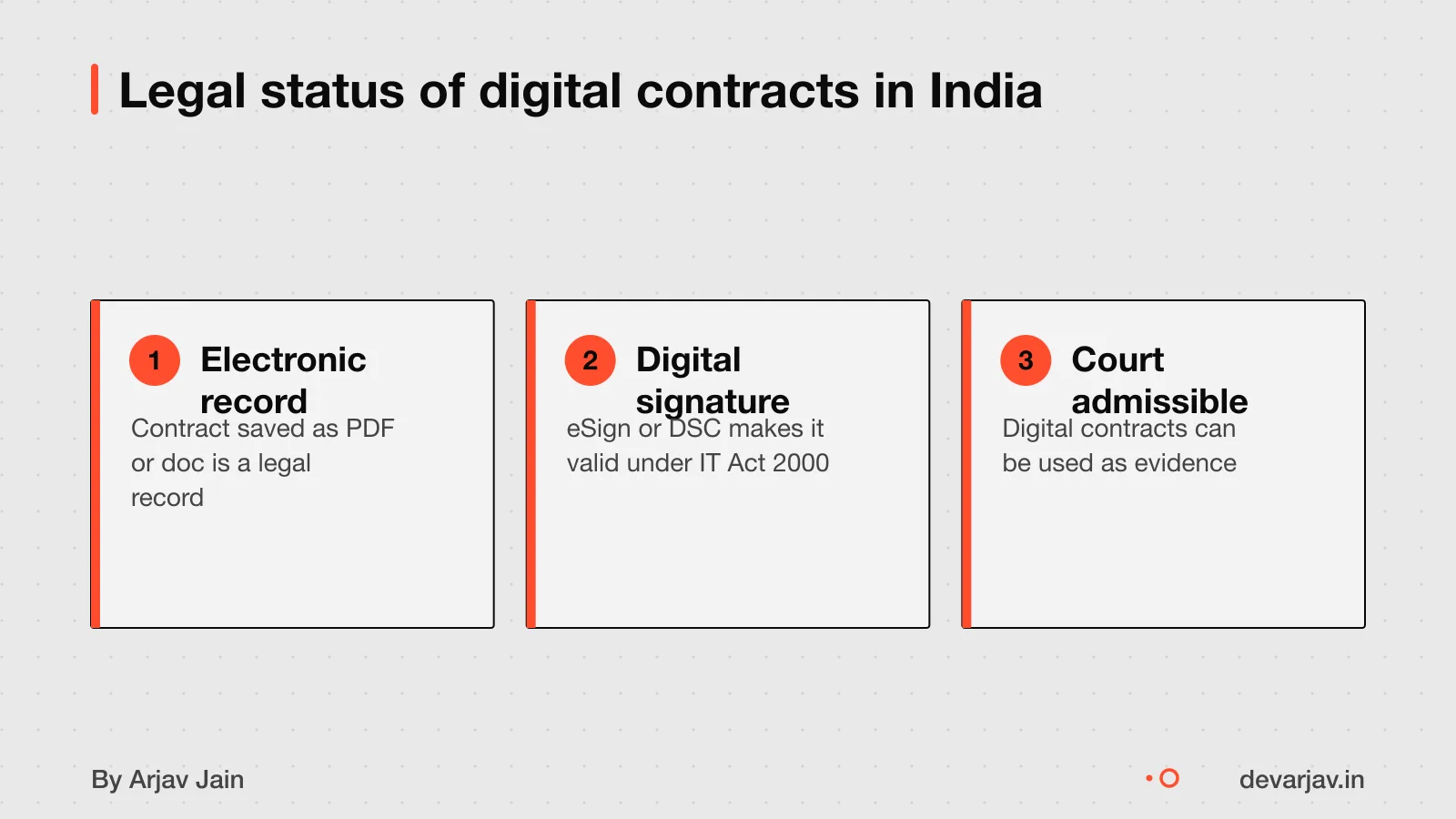
Yes, electronic records are legally valid in India under the Information Technology Act, 2000. But AI must be trained on Indian legal language and contract types to work well. Legease is designed for Indian contracts. But its accuracy depends on whether it was trained on local documents like sale deeds, rent agreements and GST invoices.
AI cannot fully understand Indian legal terms unless it learns from them. General business training is not enough. Some platforms, like LegalOn, say they are trained on public legal sources. They also support 100+ contract types including GDPR-related ones. It is not known if Legease was trained on Indian legal documents.
For example, a shop rental agreement in Hindi or a partnership deed under Indian Partnership Act. 1932 may not be read correctly if the AI has not seen similar ones. Always check the output. You remain responsible for the contract terms. Know your duties under India's DPDP Act.
Legease does not replace your lawyer
AI cannot give legal advice. But it does not understand your business risks or local laws like a human lawyer does. You remain responsible for contract terms, not the AI or its maker.
A lawyer must step in for any contract that affects your money, property or legal rights. This includes long-term leases, loan agreements, or partnership deals. Use Legease as a first pass only, never as your final decision tool.
For example, if a vendor contract has a hidden penalty clause, Legease might flag it. But only your lawyer can tell you whether to accept it based on your business.
Risks of using AI for contracts
AI projects fail in 70 to 85% of cases, often due to poor data or unclear goals. One major reason is poor data quality, which leads to incorrect outputs. If your contracts are scanned badly or saved in low-quality formats, the AI may miss key clauses or misread terms. For example, a blurry PDF of a vendor agreement could cause the tool to skip the termination clause.
AI can also make things up, a problem called hallucination. General models not trained on legal text may invent fake clauses or cite non-existent laws with confidence. This is risky when reviewing a shop lease or service contract, as you might act on false information.
Scope creep, adding features without more budget or time, is another common cause of failure. You may start with a simple NDA checker but end up needing multi-language support, which increases cost and delay.
To reduce risk, define clear goals and use clean, well-structured documents. how to pick a developer who avoids scope creep

Your data and privacy with Legease
Legease, a Flutter AI legal-document platform by Arjav Jain, does not use customer contracts to train its AI models. This claim is based on similar platforms like LegalOn. This means your contracts stay private and are not shared with third parties for machine learning. The system is designed to protect sensitive business information, such as vendor terms or lease conditions, just like a physical file locked in your office. You should check with the provider on whether servers are in India or abroad. Data export on leaving the service is not known.
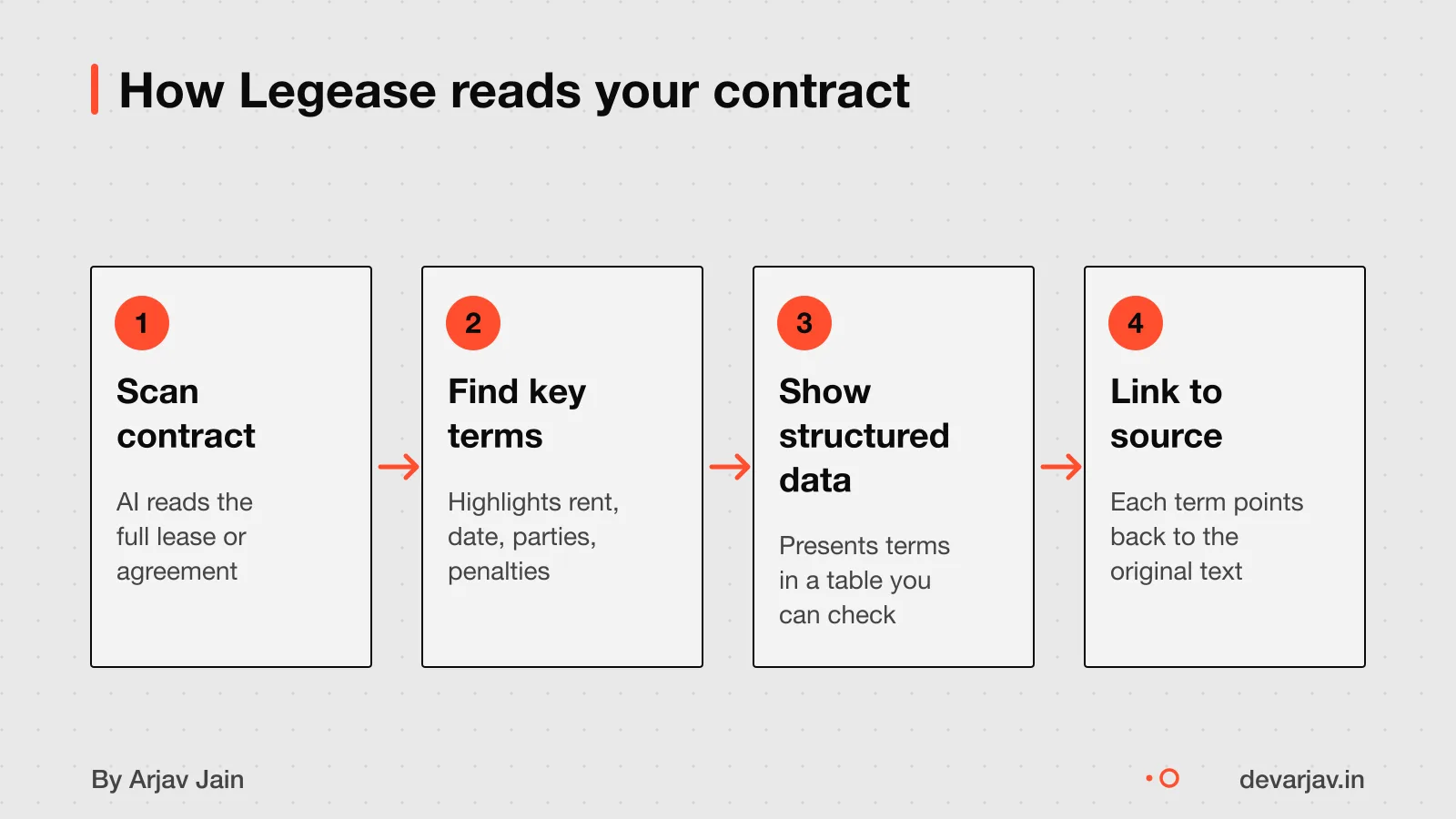
How Legease extracts data from contracts
Legease uses artificial intelligence to read your contract and pull out key details like rent, dates and penalties. It does this using Natural Language Processing (NLP), which helps the AI understand how words are used in legal text. It can find terms like monthly rent in a shop lease. The system also captures how clauses relate to each other. You can see exactly where each term was found in the original document, so you know it is not guessing. This traceability helps you review faster and reduces the chance of missing important terms.
When not to use Legease
- Do not use Legease if your contract has high legal or financial risk. AI can miss subtle clauses that a lawyer would catch. Always get a licensed attorney to review important agreements like property sales or partnership deals.
- Avoid AI tools if your contract data is messy or incomplete. AI needs clear, structured text to work well. Scanned PDFs with poor quality or handwritten notes may lead to wrong outputs.
- Do not start with AI if your goal is unclear. Projects with a specific aim and clean data do better. If you are not sure what you need, talk to a legal expert first.
- Most AI contract projects fail to deliver as expected, with 70 to 85% not reaching full use. This often happens due to poor planning or bad data.
Related reading: what a Flutter app costs in India, your duties under India's DPDP Act.
Next step: message me on WhatsApp with what you want to build. No forms, no sales team.
Message me on WhatsAppAssumptions behind the numbers
- Standard contract types are used
- Input data is clean and machine-readable
- Review time reduction applies to routine clauses only
The thinking
- 01
Problem
Small businesses waste hours reviewing standard contracts manually, missing key terms and risks.
- 02
Decision
Use AI for the first pass of contract review to flag terms and risks quickly.
- 03
Why it holds
AI handles repetitive scanning and highlights issues. Humans focus on judgment and negotiation. This split saves time and cuts errors.
What it includes
- Upload and scan standard contracts
- Auto-highlight key terms and risks
- Export reviewed data to PDF or Excel
Questions people ask
Can Legease read scanned PDFs of old contracts?
Legease can extract key terms and clauses from digital contracts. For scanned PDFs, it depends on the scan quality because optical character recognition (OCR) must first turn images into text. Poor scans may lead to errors or missed data. Always test with a sample of your scanned documents.
Does Legease support Hindi or regional language contracts?
Legease's support for Hindi or regional Indian languages is not confirmed. Some tools like Lexagle offer multilingual capabilities for global teams. If you work with contracts in regional languages, ask the provider directly whether Legease handles them and request a test run with your documents.
How accurate is Legease in finding clauses?
AI performance depends on training data and document quality. To check accuracy, test it with a sample contract and compare what it finds against a manual review. Refine inputs or settings based on results.
Can I export my data if I stop using Legease?
Before signing up, ask the provider what formats they support for export, such as PDF. JSON or CSV, and whether you can download all your contracts and metadata. This helps avoid being locked in.
Is Legease safe for sensitive business contracts?
Some AI tools do not use customer data to train their models and are built with security certifications. Legease's compliance status like SOC 2 is not confirmed. Check this for your case with a data protection officer or lawyer.
What ongoing costs come after building Legease?
Annual maintenance and inference costs add 15 to 25% to the original build cost. This includes server fees, model updates, monitoring and minor feature changes. Budget for this from day one to avoid surprises later.
Can non-technical users operate Legease?
Many AI tools need some training to use well. Test the interface with your staff before deciding. Look for simple uploads, clear results and easy navigation.
What steps are involved in building an AI contract app?
Start by defining a clear use case, auditing your contract data and building a minimum viable product (MVP). This helps test value before spending more.