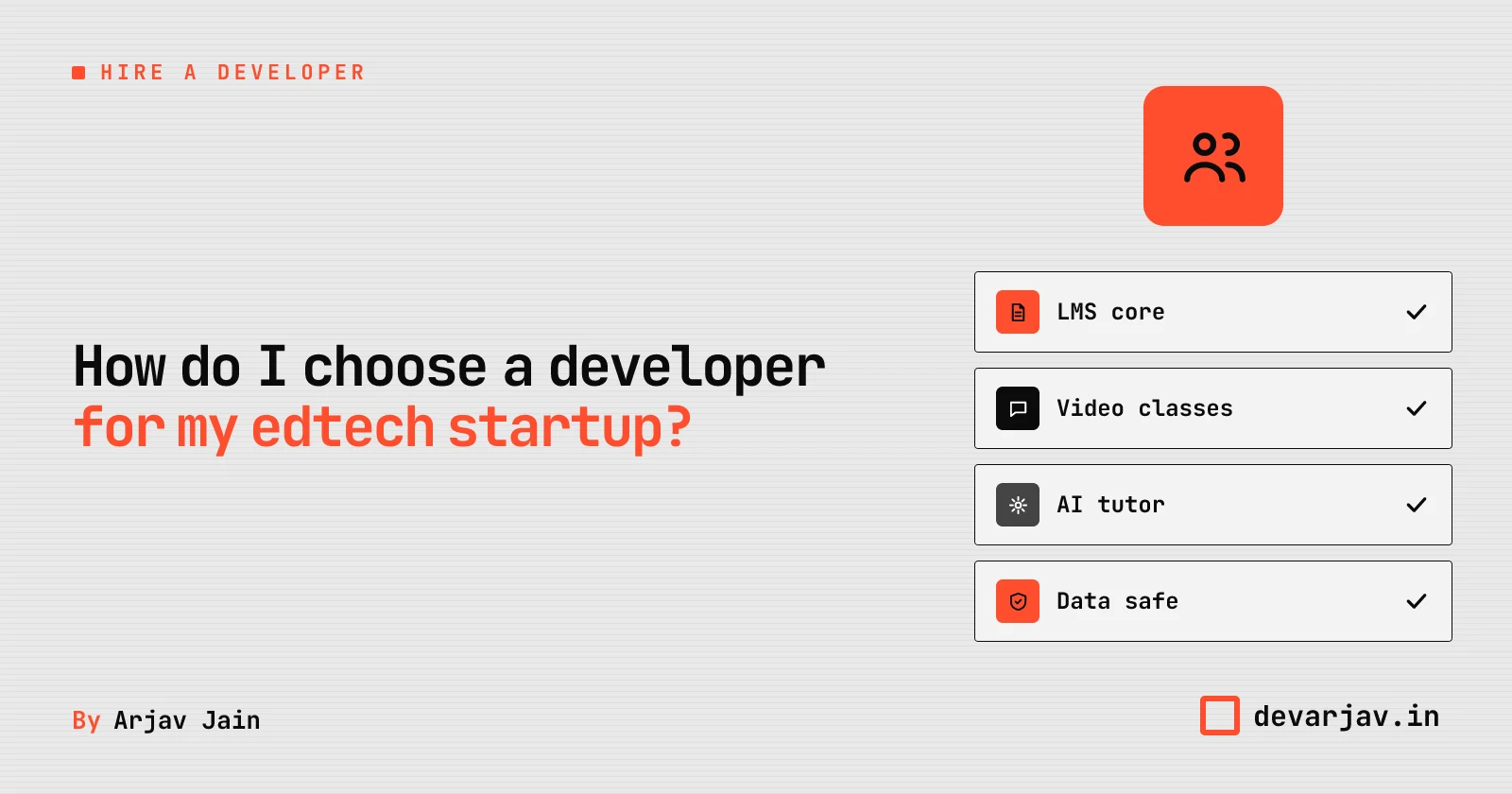
What does an edtech developer actually do?
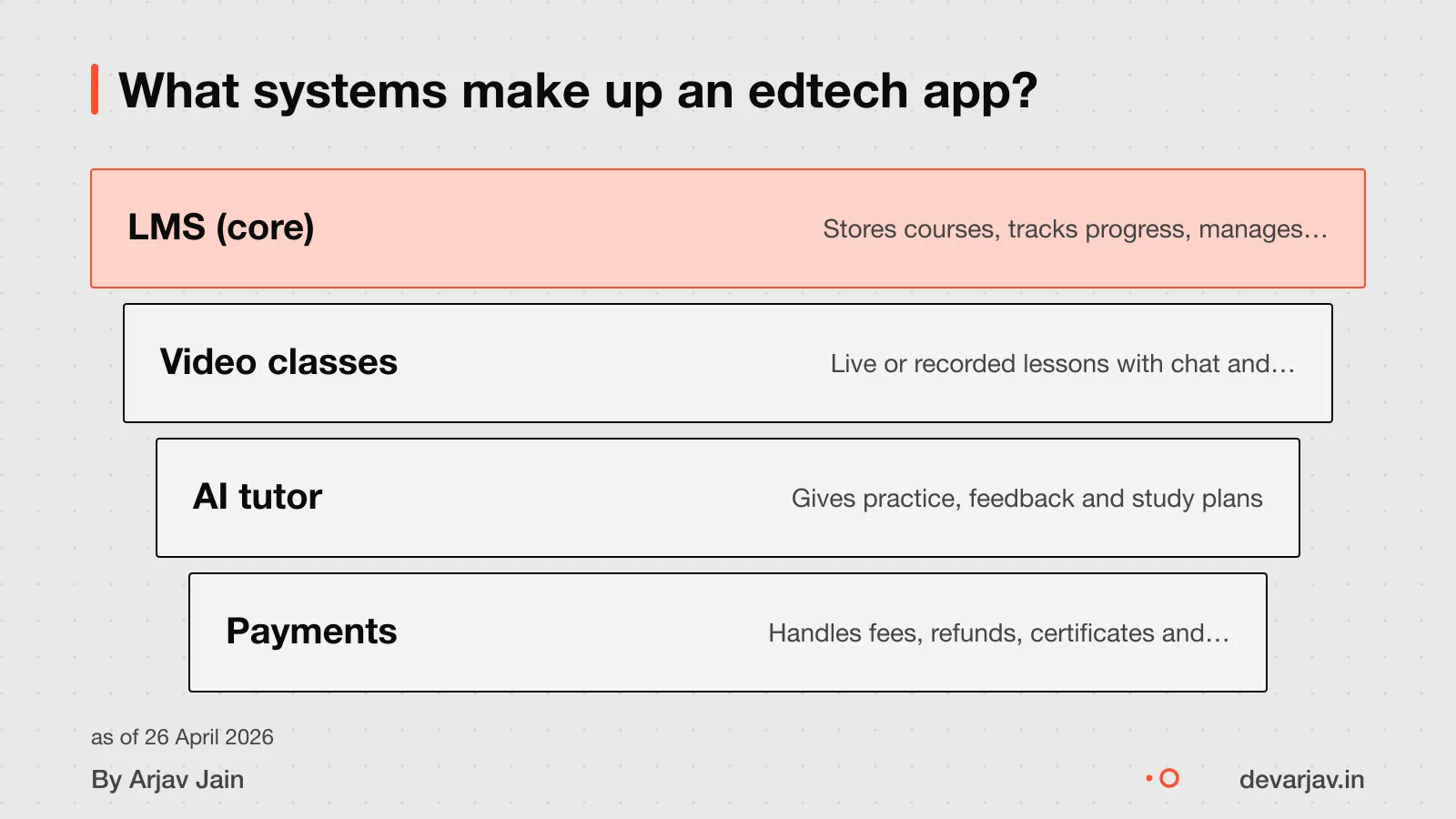
An edtech developer builds systems that manage how students join, learn, take tests, and get certificates. The core of most edtech apps is a Learning Management System (LMS). Which acts as the spine to organise courses, track progress, and support teachers and learners. You can think of it like a digital classroom with a noticeboard, attendance sheet, and assignment box built in.
Developers may also add AI features like personalised learning paths or chatbots, or video tools for live classes and recordings. But these are add-ons. The LMS comes first. A skilled developer will build it right so that AI and video can plug in later without breaking things.
Some firms, like TechnBrains, focus on custom LMS platforms that handle course delivery, progress tracking, and student engagement. If your idea needs AI or video, check that the developer has worked on those before. Not all do. For that, you may need a specialist.
the best kind of app developer for a startup
Can I use a no-code tool instead of a developer?
You can use a no-code tool if your app has simple features like course uploads, quizzes, and basic progress tracking. No-code works when you do not need custom logic or advanced user interactions. It is a good fit for testing your idea with real users before spending on custom development.
But you need a developer if you plan to add AI tutors, personalised learning paths, or speech analysis. These features require AI specialists, not just mobile coders. A developer is also needed for a custom learning management system (LMS) that matches your teaching workflow.
Live classes for more than a few hundred users also need a developer. While you can use tools like Agora or 100ms instead of building video from scratch, setting them up properly needs coding skills. For under 5,000 concurrent users, the cost of using Agora or 100ms is worth it to avoid managing your own video servers.
For example, if you want students across India to join live doubt-solving sessions in real time, a no-code tool may fail. A developer can add live video, breakout rooms, and whiteboards using proven tools.
when a no-code tool beats a custom app
How much does it cost to build an edtech app?
As an estimate, a full edtech app with 40 screens, one video platform, no AI, and standard LMS features costs ₹15 to 25 lakh. This range includes the learner app, video classes, course tools, and payments. Each major feature adds cost separately. For example, the learner app (Android and iOS) costs ₹5 to 7 lakh. The live-class video stack using Agora or 100ms costs ₹5 to 8 lakh. Course authoring and assessments cost ₹3.5 to 5 lakh. Payments, RBI auto-debit, and GST invoicing add ₹2 to 3 lakh.
Adding AI, such as smart recommendations or auto-graded answers, increases cost by ₹6 to 12 lakh. This is an estimate based on mid-tier complexity. Hourly rates also shape the final price. In 2026, Indian developers charge $15 to $40 per hour. A developer billing ₹1,200/hour (about $15) on a 1,500-hour project would charge ₹18 lakh before taxes. The same hours at ₹3,200/hour (about $40) would cost ₹48 lakh. Rates vary by skill, location, and demand.
For comparison, a D2C brand app may cost less because it lacks live video and complex assessments how much a D2C brand app costs.
Want a number for your edtech idea? Send one line on WhatsApp. I reply with what drives the cost and what to cut.
Message me on WhatsApp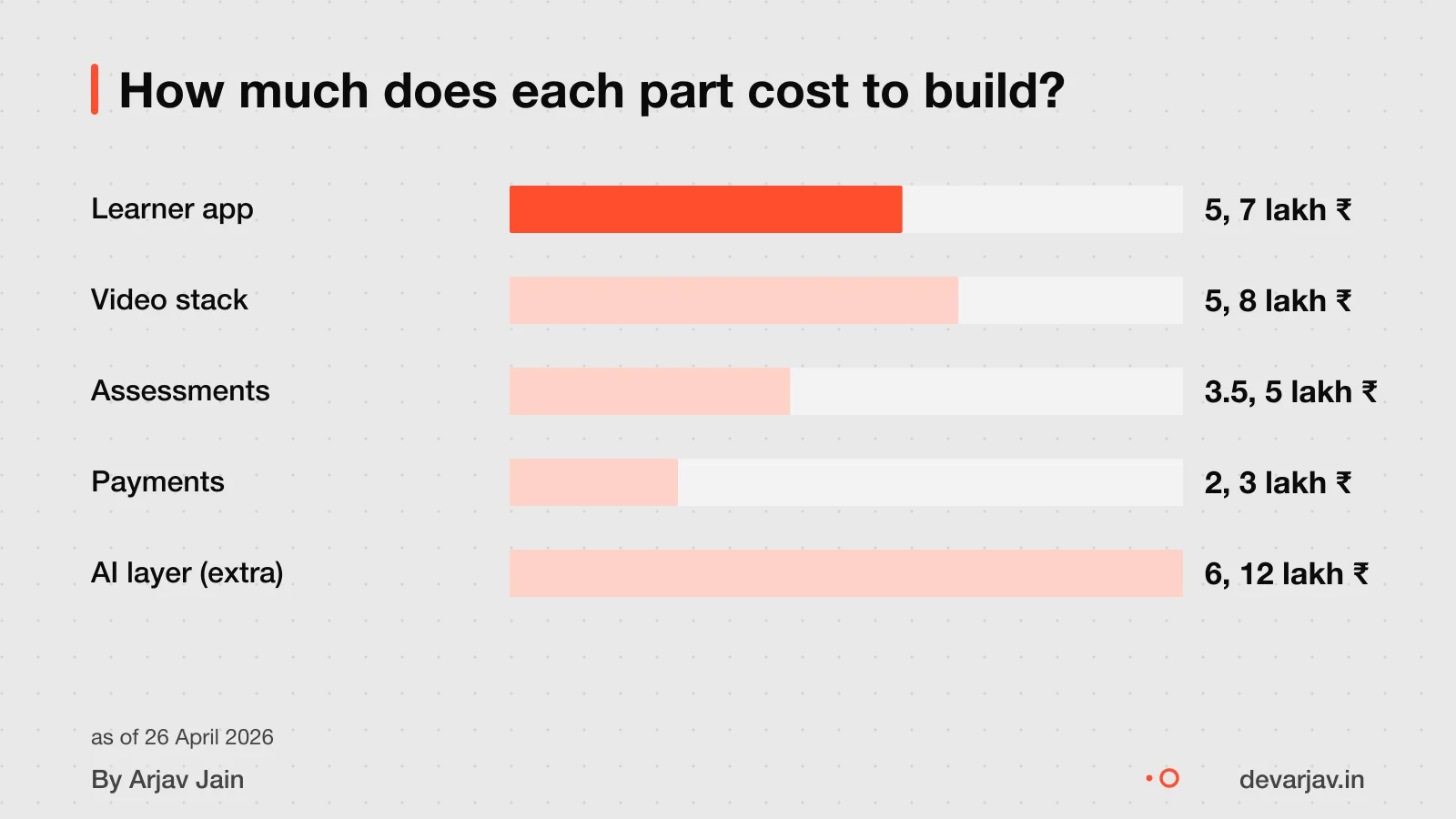
How long does it take to build an edtech app?
A basic learning management system (LMS) takes 5 to 6 months to build with a team of three engineers. This includes user sign-in, course upload, video hosting, quizzes, and progress tracking. If you add live classes, the timeline extends to 7 to 8 months. These features need real-time video, chat, scheduling, and recording, which take longer to test and stabilise.
A live-class platform with four apps (for learners, teachers, parents, and admins), payments, assessments, and basic AI can launch in 4 to 5 months. This assumes a focused scope, reusable tools, and a skilled team working full time. Delays happen if requirements change, if the team is small or part-time, or if student data rules (like DPDP) are not built in early.
You can launch faster by starting with one core feature. For example, begin with live classes for students and teachers only. Skip parent dashboards or AI suggestions at first. Add them after user feedback. Speed depends on how quickly you make decisions and share feedback.
Freelancer, agency, or full-time: which should I hire?
A freelancer is suitable when you need one expert for a project that only needs one expert. You communicate directly with them and manage the contract yourself. Freelancers are a good fit for small, well-defined jobs where you can guide the work.
An agency helps when your project needs many skills working together, such as design, backend coding, video hosting, and testing. You may talk to a project manager instead of the coder directly, depending on the agency’s setup. Agencies are better for building a full product from scratch.
Hiring a full-time developer early is risky unless you have steady work and funds. Most startups begin with a freelancer or agency to test their idea before hiring in-house.
For real examples of how coaching institutes hire developers, see how coaching institutes hire developers.
What are the biggest risks when hiring a developer?
The biggest risks are poor app design hidden behind low rates, missing AI or video skills, and unclear contracts. A developer who charges less may lack the experience to make correct architectural decisions. For example, a weak video system can break during live classes or cost more to scale. Video features are one of the most important cost drivers in an EdTech platform. If your app needs AI tutors or speech analysis, a regular mobile developer and an AI engineer are not interchangeable. You need a team with AI experience.
Indian developers can be reliable for long-term work, but only if the contract is clear. A well-structured deal with direct access to the developer, a named team, and a replacement plan reduces risk. Without these, you may face delays or lose control of your app. Always sign a contract that says you own the code and sets clear milestones.
What laws apply to edtech apps in India?
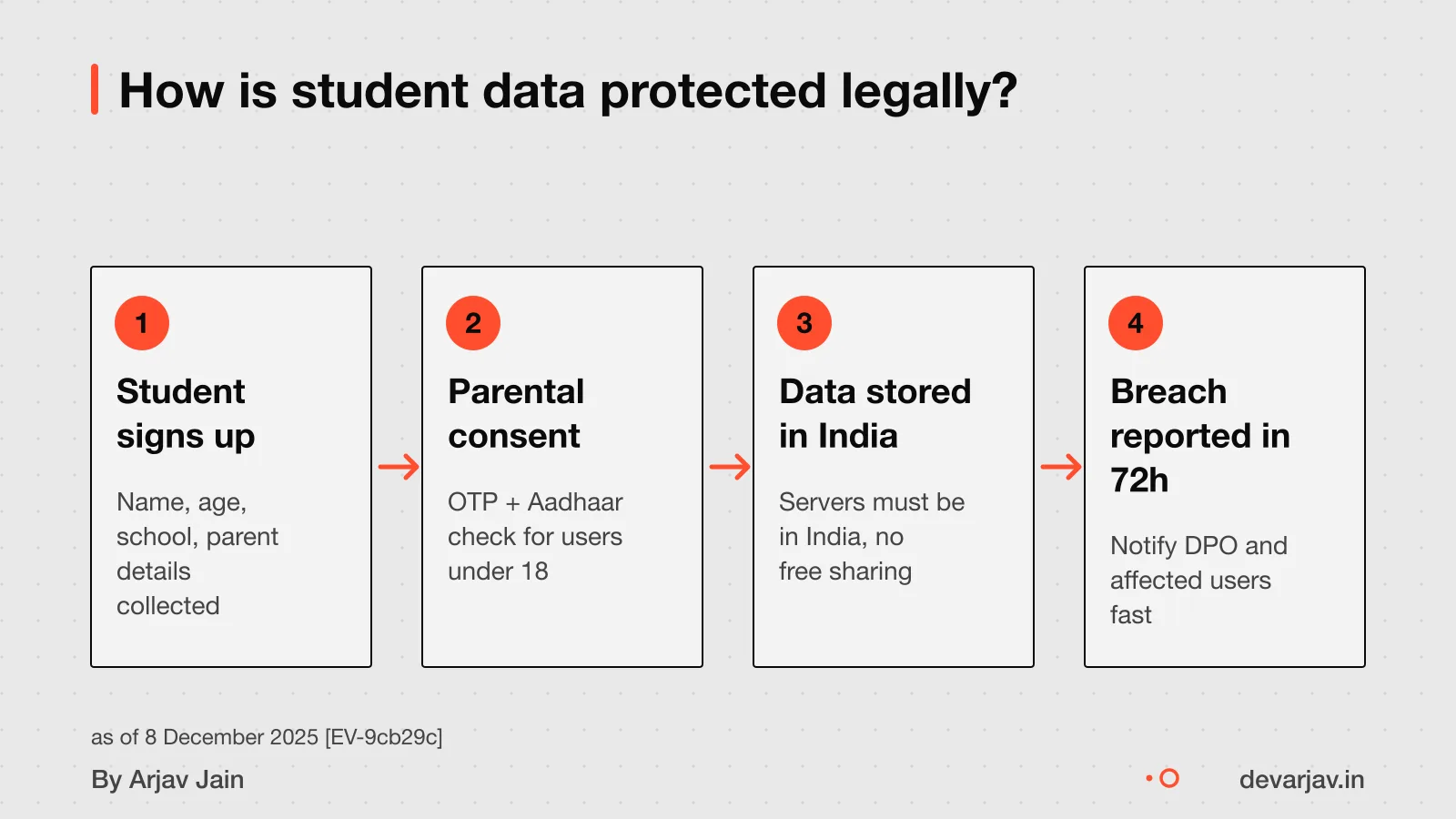
The DPDP Rules 2025 emphasize user consent, data security, data principal rights, and breach reporting, with full compliance expected by 13 May 2027. This includes names, phone numbers, email IDs, learning progress, and device details. You must get clear consent before collecting data and let users access or delete their data. Full compliance is expected by 13 May 2027.
Children’s data gets extra protection under the law. Anyone under 18 is considered a child. If your app serves students below 18, you must obtain verifiable parental consent before processing their data. Avoid collecting biometric data like fingerprints or facial scans. Such data is highly sensitive and hard to replace if leaked, leading to lasting harm.
You can send data abroad only if the country is on the Government of India’s approved list. Do not assume any international cloud provider is compliant.
Rules may change, and your app’s features could bring in other laws. For example, if you offer career counselling or certification, additional rules might apply. [how clinic apps handle patient data] to see how another regulated sector manages data. For your case, talk to a data protection lawyer before launch. They can review your data flows and consent forms.
Who owns the code and what should the contract say?
ITD GrowthLabs delivers apps with 100% source-code ownership to the client. This means you can update, scale or switch developers later without losing control. Always insist on 100% ownership in writing.
Your contract must list key terms to avoid future disputes. These include working hours, holidays, reporting structure, communication tools, code ownership, confidentiality, and what happens if the developer leaves. A clear replacement policy and notice period protect you if the developer stops working.
The contract should also define what the developer’s rate covers. For example, it should include coding, code reviews, debugging, technical meetings, documentation, and agreed engineering tasks. This stops extra charges later.
This keeps costs predictable.
If the developer leaves, your contract should allow for a smooth handover. You must get all code, documentation, and access to tools. A replacement policy ensures someone else can step in.
the complete guide to hiring a developer in India
Have a contract in hand? Send it to me and I will mark what is missing.
Message me on WhatsAppHow to check a developer’s past edtech work
Ask to see two live edtech apps they have built. Look for a learner login, course dashboard, progress tracker, and quiz or certificate feature. These confirm they can build a working Learning Management System (LMS). If they cannot show two such apps, they may not have real edtech experience.
To verify student data consent, ask how they handled personal data like names, emails, and learning records. A responsible developer will explain they collected only what was needed and got clear consent. India’s Digital Personal Data Protection (DPDP) Act requires clear consent for personal data use in apps. Ask if their past apps had a privacy notice and an option to delete data.
You can test the app yourself by using it as a student would. Try signing up, joining a course, watching a video, taking a quiz, and checking your progress. See if it works smoothly on a slow 4G network and a budget phone.
When this advice does not apply
When this advice does not apply
Do not hire a developer if your needs are simple, such as uploading pre-recorded courses and giving basic quizzes. In such cases, a no-code platform like Thinkific or Teachable may be faster and cheaper.
Switching developers later requires full ownership of the source code and full documentation. Without these, you may face high costs or delays.
Hidden costs after launch include server fees, app store payments, third-party tools like video hosting, and regular updates. These are often not included in the initial build quote.
Next step: message me on WhatsApp with what you want to build. No forms, no sales team.
Message me on WhatsAppAssumptions behind the numbers
- App includes LMS, video, assessments, payments
- Developer works directly, not via agency layers
- Project is custom code, not no-code
Your checklist
Before you hire, here are 12 things to check. Tick what you’ve verified.
Experience
Compliance
Ownership
Contract
Walk away if
- Does not mention DPDP or parental consent
- Won’t share past learner app examples
- Charges by the hour without milestones
- Keeps code or accounts after delivery
- Promises everything in phase one
Questions people ask
What should I check before hiring a developer for my edtech app?
Check that you will own the source code, the developer follows DPDP rules on user consent. Data security, and you have direct access to the code and team. Your contract must state these clearly. For help, see the complete guide to hiring a developer in India.
How should I pay the developer?
Pay in milestones, with each payment tied to the delivery of working code and documentation. This keeps both sides accountable and reduces risk. Include this in your contract.
What if the developer stops working midway?
Your contract must include a replacement policy and give you full access to the code if the developer leaves. This ensures work can continue without delay. Check this for your case with a lawyer.
Do I need a Data Protection Officer for my edtech app?
Only if you are a Significant Data Fiduciary under the DPDP Act. Most small and medium edtech apps are not. Check this for your case with a data privacy consultant.
How do I report a data breach under the DPDP Act?
You must submit a detailed report to the Data Protection Board within 72 hours of becoming aware of it. The report should include details of the breach and steps taken. Check this for your case with a lawyer.
Can I use AI in my edtech app legally?
Yes, but avoid harmful profiling of children and assess whether each AI tool is necessary and proportionate. This is required under the DPDP Act.
What if my app grows fast? Will the code handle it?
A good developer plans the app’s architecture to handle growth. Ask them how they will design for scale, especially in video or user load. Poor choices now can cost more later.
What are the common post-launch costs for an edtech app?
Common post-launch costs may include server fees, app store commissions, and regular updates. These are not always included in the initial quote. Get a full list from your developer.